
Water Heaters
Help! The Plastic on Top of My Water Heater Is Melting
 By Mike Mackin, Owner ·
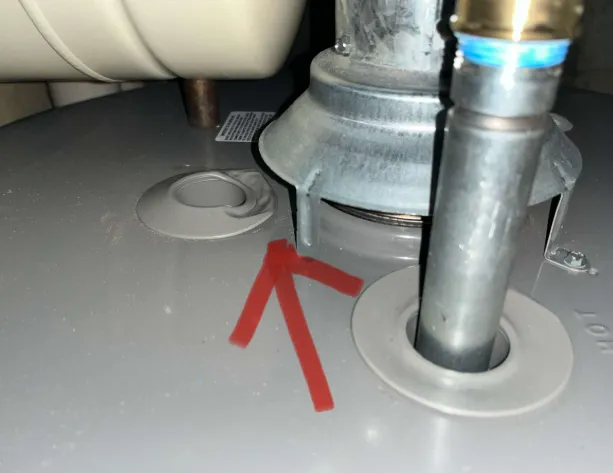
Melted or warped plastic on top of a gas water heater is not a cosmetic problem. It usually means the exhaust that should be rising up the flue is spilling out at the top of the tank instead, hot enough to soften plastic, and carrying combustion gases, including carbon monoxide, into your house. This is the one water heater symptom we tell people not to sit on. Here is what is happening, what to do right now, and how it gets fixed.
What that plastic is, and what spillage means
The pieces of plastic on top of a gas water heater are just collars around the holes in the water heater jacket. They protect us installers from slicing up our fingers when working on the heaters. They usually sit only inches from the draft hood, the open metal funnel where the exhaust leaves the tank and enters the vent pipe. When the vent is drafting properly, all of that exhaust, several hundred degrees hot, goes up and out. The plastic never feels it.
When the draft fails, the exhaust rolls out of the hood and washes over the top of the tank instead. The plastic softens, warps, and melts. So melted plastic is not really the problem. It is the sign that something is preventing the exhaust from leaving your house, and everything in that exhaust, heat, moisture, and carbon monoxide, is ending up indoors.
How the vent is supposed to work
An older, atmospheric-vented tank water heater has no blower motor. Nothing pushes the exhaust out. It leaves the house only because hot gas rises. That works as long as the path is clear and the air cooperates. It is a system with no moving parts, which is exactly why nothing alerts you when it quietly stops working.
Why the draft fails
A blocked flue or chimney. Bird and animal nests, fallen leaves, crumbled brick or clay liner tile. The exhaust hits the blockage, cannot escape, and spills out of the draft hood onto the top of the water heater.
Inadequate exhaust venting. A long horizontal vent run, or one with too many twists and turns, can slow the exhaust enough that it spills out. The bigger version of this problem, common in older homes throughout Akron and Medina and even mid-century homes in Wadsworth and Copley, comes with a furnace upgrade. When a high-efficiency furnace switches to sidewall venting with its own blower, the old water heater is left alone on the chimney. The old furnace used to keep that flue nice and warm, so the water heater’s exhaust drafted up easily. With the furnace gone, the chimney stays cold, especially in winter, and the water heater’s small exhaust stream struggles to start the draft on its own. If your plastic started melting within a season or two of a furnace replacement, this is the first thing we check.
Temporary spillage. Sometimes the spillage only lasts a second or two when the burner first fires and hits the cold air in the chimney, before the draft catches. We consider that within the normal range. It can slightly melt the collars over time, but it is not by itself a sign of serious flue problems. The diagnosis tells the difference.
The house pulling the other way. A tightly sealed house with a big range hood, a clothes dryer, and bathroom fans all running can pull enough air out that replacement air comes down the chimney, dragging the exhaust with it. These are the sneaky cases, because the heater may backdraft only when certain things are running.
What to do right now
Turn the gas control on the water heater to OFF, or to PILOT if you cannot find OFF. That stops the burner, which stops the exhaust. The cold water still flows, nothing floods, you just will not be making hot water until it is looked at.
Then check that you have a working carbon monoxide alarm near the sleeping areas. If a CO alarm is sounding, or anyone in the house has an unexplained headache, dizziness, or nausea, get everyone outside first and call 911 and your gas utility’s emergency line before anything else.
If it is just the melted plastic and no symptoms, it is not an evacuation. It is a same-day phone call so we can come run some tests. Describe what you see and we will treat it with the priority it deserves. Our emergency line answers around the clock.
How it gets fixed
The fix depends on where the draft is failing, and the diagnosis comes first. Part of ours is a spillage test at the draft hood with the burner running, which confirms in seconds whether the vent is doing its job.
A blocked flue gets cleared. A sagging, rusted, or badly sloped vent connector gets replaced and set right. An orphaned water heater on an oversized chimney can get a smaller, correctly sized liner so the flue warms up and drafts the way it should. Lining a chimney is sometimes chimney-contractor territory rather than plumber territory, and if that is what your house needs, we will say so and do our best to help you find a good one.
And when the tank is old anyway, there is a permanent way out: replace it with a unit that does not depend on a natural draft at all. A power-vent tank pushes its exhaust out the side of the house with a fan, and a tankless unit vents the same way. That is the route that ends this problem for good, and it pairs with the decision points in our repair or replace guide.
The bottom line
Melted plastic on top of the tank means the exhaust is coming into the house instead of leaving it. Shut the burner off, make sure the CO alarm works, and get it diagnosed the same day. Mackin & Sons is family-owned out of Wadsworth, serving Greater Akron since 2009, licensed, bonded, and insured. Book a visit or call 330-825-3686 and tell us what you found.