
Emergency
My Pipes Froze. What Do I Do Right Now?
 By Mike Mackin, Owner ·
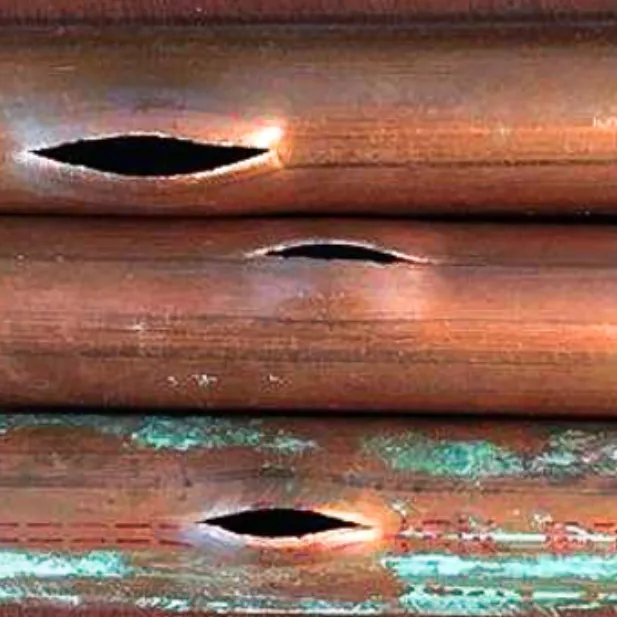
Every winter we get frozen pipe calls from homeowners in and around Akron, Wadsworth, and Medina, usually the first morning after a stretch of single-digit nights. Most start the same way, with a faucet that gives a trickle or nothing at all. Here’s a guide on what to do next.
Do these in order, no tools needed
- Open the faucet that stopped working, hot and cold. If it’s the toilet that won’t fill after a flush, there’s nothing you need to open.
- Find your main water shutoff and make sure it turns. It is usually somewhere on the front wall of the house, or if you have well water, near the pressure tank where the water comes into the house. You do not need to close it yet, but you want to be able to close it in seconds if the thaw shows you a split, and old valves sometimes seize.
- Check the other faucets. If the rest run, the freeze is just on the section that feeds the frozen fixture or bathroom. If none of the faucets in the house work, the freeze is usually on the main line somewhere.
- Try to find the cold spot. We typically look in poorly heated crawl spaces, exterior walls, garage ceilings, and second-floor overhangs.
- Warm it up. If you’re lucky, you can just put a heater in the area. Frozen upstairs bathroom sinks, for instance, may thaw out just by opening the cabinet doors and running a small space heater in front of them. Pipes in a cold crawl space can be thawed by getting in there with a hair dryer and applying the heat to the frozen section of piping. Even when the frozen area is fairly accessible, like a crawl space or garage ceiling, it usually takes more heat, for longer, than most people think.
- Watch what happens. Many times the frozen pipe is inside a wall and inaccessible, which leaves a couple of options. One is to cut the wall open to get heat into that space. The other is to wait it out, and around Northeast Ohio the thaw usually happens when the sun finally comes out and temperatures hit 15 to 20 degrees.
- Don’t risk a flood by being gone when the pipes thaw. If you’re at work when they thaw out and the pipe has a split in it, you’ll be looking at a serious flood once that section of ice turns back to water.
On a private well the same steps apply, with one extra place to look. If the whole house is dry during a cold snap and the pressure tank sits somewhere unheated, the small tube under the pressure switch is a common spot to freeze.
Safe heat only
A hair dryer, a portable space heater, an electric heating pad, or towels soaked in hot water and wrapped around the pipe all work. Turning the thermostat up a few degrees and opening the cabinet doors under a sink on an outside wall help too. Keep a space heater well clear of anything that can burn, never leave it running in an empty room, and keep the hair dryer away from standing water.
Never use an open flame. That rules out a propane torch, a kerosene or propane heater in a closed basement or crawl space, and a heat gun parked in one spot. A torch can scorch the framing inside a wall before you ever see smoke, it will melt PEX, and fuel-burning heaters fill a closed space with carbon monoxide.
If you have had heat on it with no luck, or if you think the frozen area is just inaccessible, stop and call. Our guys are pretty good at pinpointing where freezes occur and how to get those spaces warmed up.
It froze even though I left the water dripping
Letting the faucet drip on a cold night is the right move, but it’s no guarantee, and a drip that is too slow can still freeze. We tell our customers to turn on the hot and cold and let them “drip quickly,” a little less than a stream but a quick drip, because hot water lines can freeze too.
We’ve even seen vertical drain lines in outside walls freeze. One January a Wadsworth customer called for a clogged drain, and our cable felt like it was hitting a brick wall. It turned out the line was frozen solid, and our tech rerouted it that same day so it would not freeze again.
Hose faucets and tub and shower traps
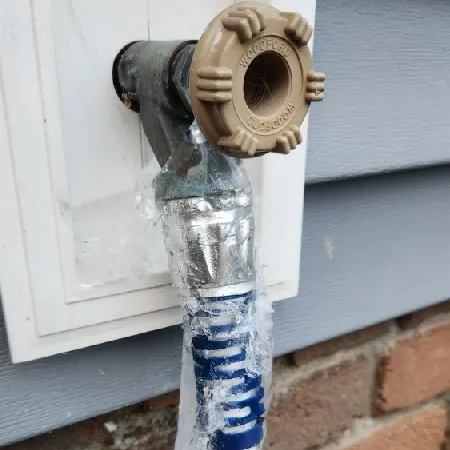
Remove your hose from your hose faucet before the cold weather comes. About half the basement flooding calls we get in the spring are due to burst hose faucet piping, because a hose left connected doesn’t let the water drain out of the faucet. Come spring, when people turn on the hose faucet, the leak shows up.
And remember, tubs and showers have traps that hold water on purpose, but if they are exposed to freezing temperatures for long enough, the water in those traps will freeze. Usually these pipes don’t break, but it will seem like your tub or shower is clogged.
When it is time to call Mackin & Sons Plumbing
Plenty of frozen pipes thaw with a hair dryer and some patience. Call us when you cannot find or reach the frozen section, when it is inside a finished wall or ceiling, when the whole house is dry and your neighbors have water, when you have had heat on it for an hour and still have nothing, or when you see any sign of a split. In those cases more heat or more force is what turns a frozen pipe into a burst one.
Mackin & Sons Plumbing is family owned out of Wadsworth, with 17,000+ jobs since 2009, and we answer emergency calls 24/7 with extra slots held open on the coldest winter nights for frozen and burst pipes. A lot of the time we can talk you through the shutoff and the thaw over the phone for free, and if you still need a plumber, your tech texts when they are on the way.
Dispatch is $79 in our core area, $89 in Greater Akron, and the fee is waived if you go with the work. The full price goes in writing before any work starts, at 2 a.m. the same as at noon, and how we price every job is on our pricing page.
If the same pipe froze last winter too, it will keep freezing until something changes, usually insulation, sealing the draft that hits it, or moving the line. Our guide to avoiding frozen pipes covers what to do before the next cold snap, and if you would rather have us find the cold spot and fix it for good, call 330-825-3686.