
Drain Cleaning
A Clogged Tub Drain in Norton Had a Deeper Issue: A Drum Trap
 By Mike Mackin, Owner ·
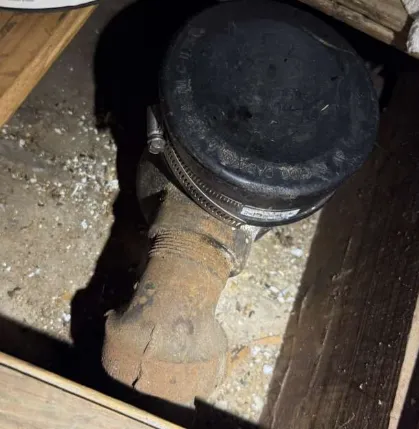
If your tub keeps clogging in an older home, the problem might not be hair at all. It might be a drum trap, an obsolete fitting that chokes the drain from the inside and clogs again no matter how many times the line gets cleared. That is exactly what we found at Sheila’s place in Norton.
The call: a clogged tub with a twist
When Sheila in Norton called us about her clogged tub drain, we anticipated a standard service call. Likely a common buildup of hair and soap scum, cleared in one visit. We were in for quite a surprise.
One of the first questions our plumber Josh got when he arrived: “Can you get rid of that drum trap?”
We run into drum traps all the time in the older neighborhoods of West Akron, Fairlawn, and Medina. In Norton, where most homes are relatively modern, they are rare. This one looked original to the house, and it had been causing trouble for a long time.
What a drum trap is
Every fixture drain needs a trap, the bend that holds a little water so sewer gas cannot rise into your home. A modern tub uses a P-trap, a simple curved fitting that water and drain cables pass through easily.
A drum trap is the old way of doing that job. It is a metal canister with a removable lid, and the lid was the selling point. Unscrew it, scoop out the gunk, screw it back on. Easy cleaning, at least when the trap was new. Drum traps have not been commonly installed in over 50 years, and time has not been kind to the ones still in service.
Why drum traps clog and have to go
The removable lid that made drum traps convenient is the same thing that makes them a headache today. The lids rust shut. The internal piping accumulates solidified buildup, layer over layer, until the effective drain size is down to nearly nothing. So the tub drains slower and slower, clogs, gets cleared, and clogs again, because the real problem never leaves.
Trying to reseal an old lid is often a nightmare in its own right. And more importantly, drum traps are now prohibited by the Ohio Plumbing Code. You cannot legally put one back into new work, so the right move is to take it out. If a plumber has ever told you they could not properly snake your tub, a trap like this is often the reason why.
Want to check your own home? Look below the tub, from the basement or a crawl space or an access panel behind the faucet wall. A curved pipe means you have a P-trap and can stop reading here. A canister shape like the one in the photo above means you are living with a drum trap.
The fix: modern piping that stays clean
Sheila’s home needed updated tub drain piping, so we proposed the permanent fix: remove the outdated drum trap and the associated waste and overflow piping, and replace it all with a modern PVC P-trap.
The waste and overflow, if you have not heard the term, is the tub piping you never see. It is the drain itself plus the overflow, that round plate below the faucet that catches water before the tub spills onto the floor. On piping this old, those parts had given all they had. Replacing them along with the trap means every piece of that tub’s drainage is new, sealed, and serviceable.
That does two things at once. It ends the recurring clog at its source. And it means our professional drain cleaning equipment can pass through the line and maintain the rest of it effectively and cleanly for years to come. A trap you can service beats a trap you have to fight. Tub and shower work like this runs through our bathroom plumbing team.
Band-aid or fix it for good? Your choice.
Like we always say, plumbing does not last forever. Repairs on older homes can be costly, so we always try to provide a less expensive, band-aid option when one exists. And when it is time to finally get that plumbing headache taken care of for good, we will price that option too. You see both numbers in writing, and you make the call. Nobody gets surprised at the end of the job.
Sheila went with the fix that lasts, and her tub now drains the way it should.
If a drain in your house keeps clogging no matter what you pour down it or how often it gets snaked, there is usually a reason. We wrote about why drains keep clogging and what actually ends the cycle. And if you are in Norton or anywhere nearby, call 330-825-3686. We diagnose the root cause first, you get a flat price in writing before any work, and the dispatch fee is waived if you go with the work. Common job ranges are on our pricing page.